In this penultimate exploration of the Chaos Map as a gameboard, we leave gravity. Launching into Chaos reveals galaxies of wonderful, terrible possibilities. Whiffs of patterns suddenly appear to explain everything or nothing — then dissipate as quickly. Nothing’s predictable; everything’s possible. But for all its hallucinogenic, terrifying beauty, we’ll likely return empty-handed. Like billionaire-fueled space travel, orbiting the Chaos beyond earthly patterns is intoxicating, deadly, and of little practical use on the ground.

Visionland’s potential is as profoundly experienceable as it is inexpressible. We may use spiritual practices like a telescope to get glimpses of it now and then. But even those dim views — when put into words — sound like mystical nonsense or heresy to most ears.
Even the rare spiritual cybernaut with a strong affinity for Relational Chaos can’t remain long without unraveling. Like encounters with Old Testament angels, this trip may only be experienced in micro-doses or annihilation. We enter it by untethering from reality yet leave transformed in reality — and surprisingly often for the better.
“This I can declare: things that are in heaven are more real than things that are in the world.” – Emanuel Swedenborg.
Practices require patterns: methods, doctrines, instructions — so the plays here can’t be practiced. Defining Visionland’s inexpressible, messy dysfunctionality is a fool’s errand (but that’s yet to stop me). Just know that the plays described will only resonate to the degree that you’ve experienced them, and then you’ll know it to be entirely inadequate.
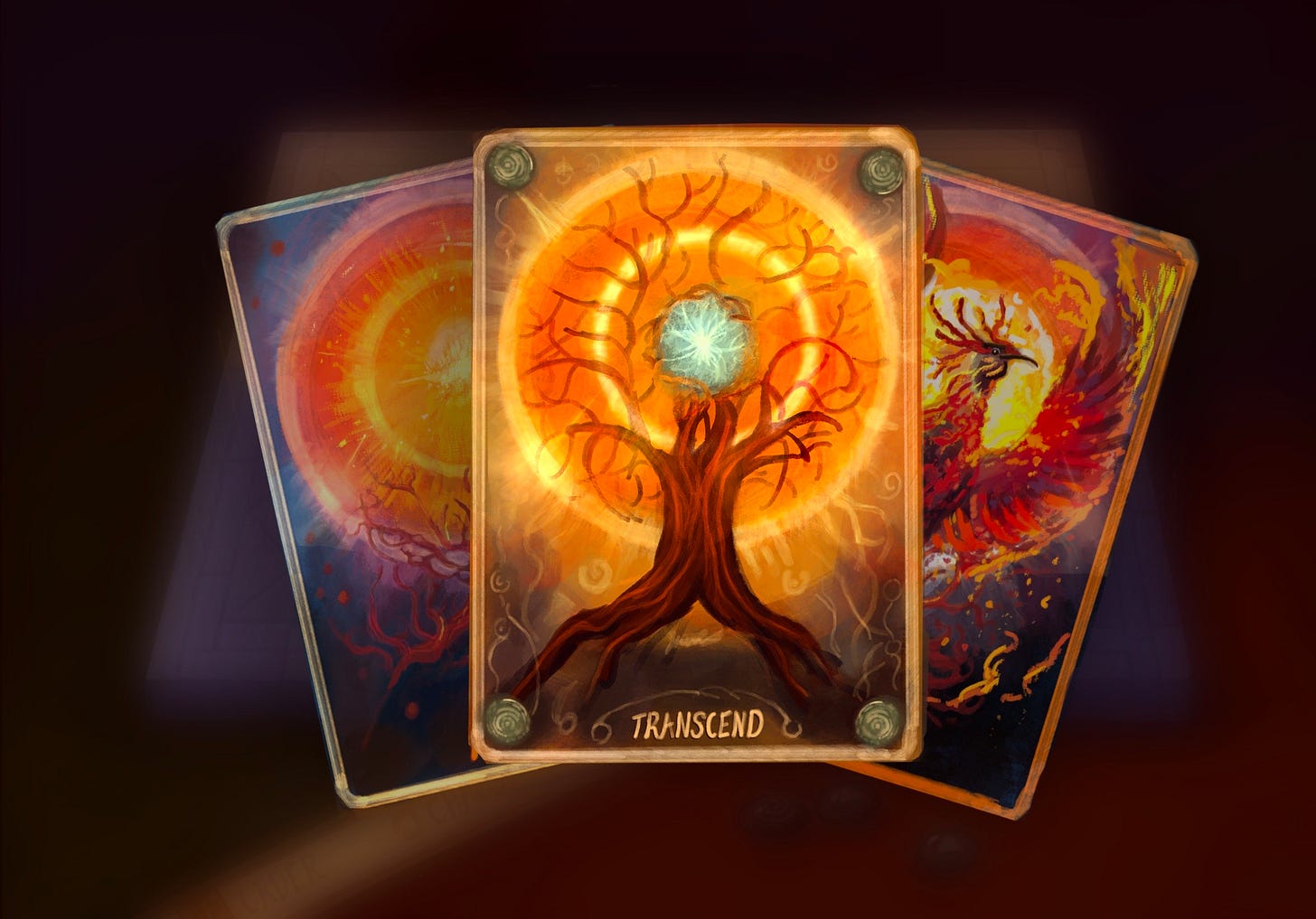
We can only make this play by giving up. As we abandon subtle, pervasive grasping for defined relationships, we may encounter something greater. And then we stop grasping to define a pattern called “ourself” too.
TRANSCEND appears first as pattern collapse: all relational patterns — our identity, family, the culture wars, humanity — merge into a kaleidoscope of timeless oneness. It occurs inside us but transforms our relationship with everything around us. Colors grow vivid, sounds sharpen, and we feel deeply connected to everyone and everything. It’s not observable, measurable, or describable — only experienceable in an out-of-body sense that heightens all senses.
“We are not human beings having a spiritual experience. We are spiritual beings having a human experience.” - Pierre Teilhard de Chardin.1
TRANSCEND often shows up in mystic visions, conversion experiences, and psychedelic trips. While it can be partly expressed in symbols, parables, art, music, and spiritual rituals, few people meaningfully make this play.
Most of us get whiffs of it in small out-of-body experiences: the peak “flow state” we enter when fixated on creative work, as we fall in love, or are washed over with awe while gazing at the night sky or our newborn child.
TRANSCEND is intoxicating to anyone seeking spiritual respite from dismally boring or intolerable everyday life. It often leads to a darker play — TRICK2 — where a formula or secret pill is dangled before those desperate to access The Divine (for a fee).3
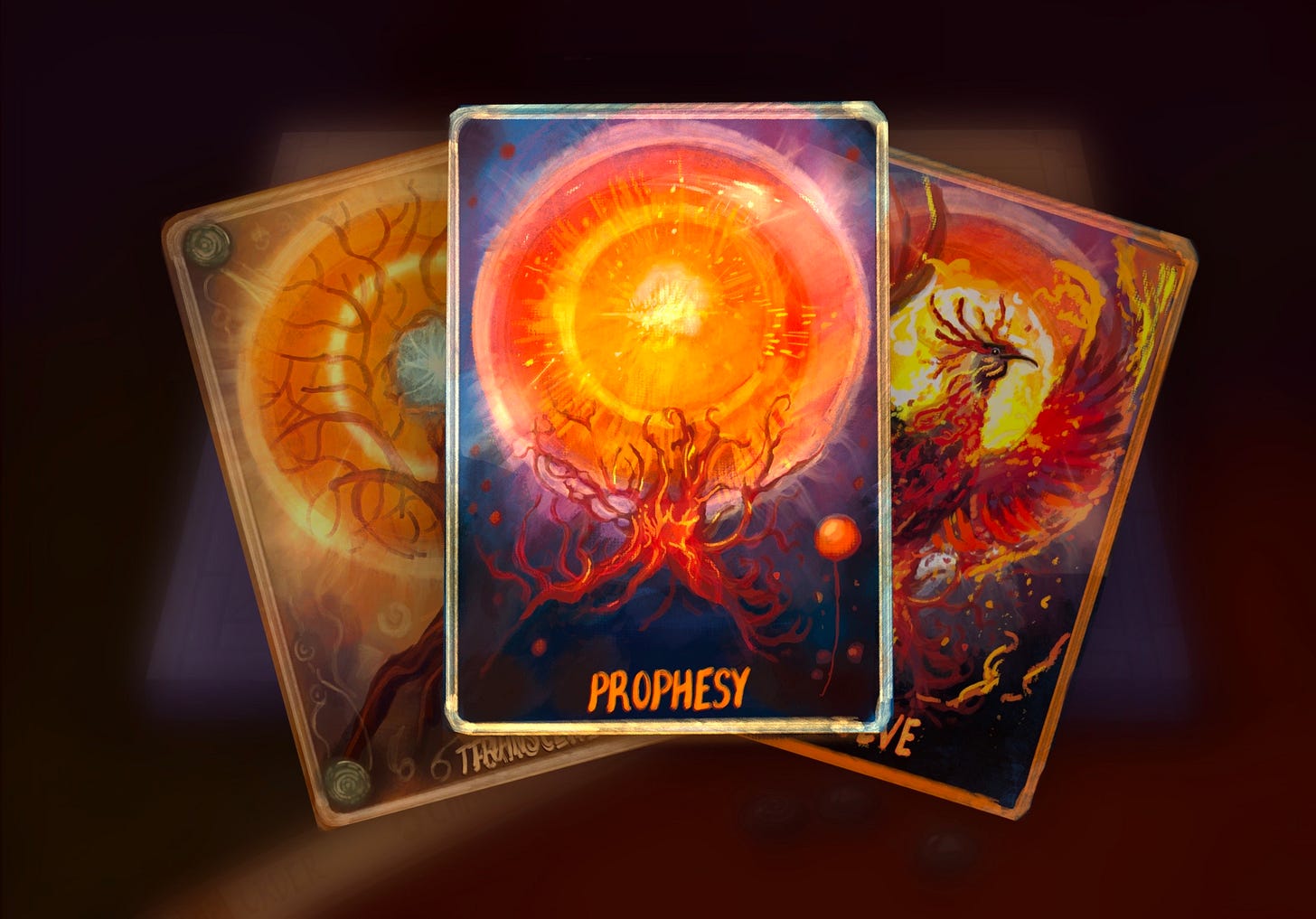
The Chaos here contains only unrealized possibilities for cosmically profound potential relationships. As such, it’s indistinguishable from the future. The few who reach this galaxy view sometimes sense premonitions of humanity-wide shifts like an X-ray view of tectonic plates about to collide under our feet as we plod along with life as usual above the surface.
This leads to inexplicable intuitions for where humanity’s headed — be it a Promised Land or Apocalypse.
PROPHESY may surface as a sharp pang of realization that a single person or entire community might be nudged by 1° resulting in something between eventual transformation or destruction.
It also emerges as an instant-read of a stranger’s character, past, or future. (Orbiters of Visionland have an uncanny ability to size people up yet, paradoxically, an inability to size up themselves.)
While these visions are sometimes directionally correct, they’re predictive, not precise. Details, logic, or timelines4 don’t exist in Chaos and can’t be trusted in the rare cases they’re given.
These galaxy-brained proclamations naturally appear wildly contradictory from the ground of reality. In one moment, they may emote a beautiful, humanistic vision, and in another, blanket damnation of entire generations. Don’t look for coherent, safe, or actionable insights here.
Accordingly, prophets of yore are revered only after being derided as heretics by all but a few in their lifetime. Visionland plays are largely inaccessible to the mainstream, but PROPHESY is intolerable within any well-ordered social group, whether left or right, religious or secular.
And not without reason: PROPHESY easily flips its darker side — DECEIVE5 — where sensational predictions become tools for nefarious manipulation.
We need (small doses) of Relational Chaos to ignite the edges of our social fabric to reach our future potential. And we need its dire warnings too. But the transient, messy vagueness of Relational Chaos is hard to maintain in a well-ordered family, company, or culture. To benefit from it, we have to learn how to listen to it:
More like a poem than a plan. More like performance art than a treatise. We benefit from being moved by it but shouldn’t crown it.
But if we shun the prophets in our life, we — or, more likely, our children or grandchildren — will confusedly watch the creative, generative life drain from our community after it’s too late to remedy.
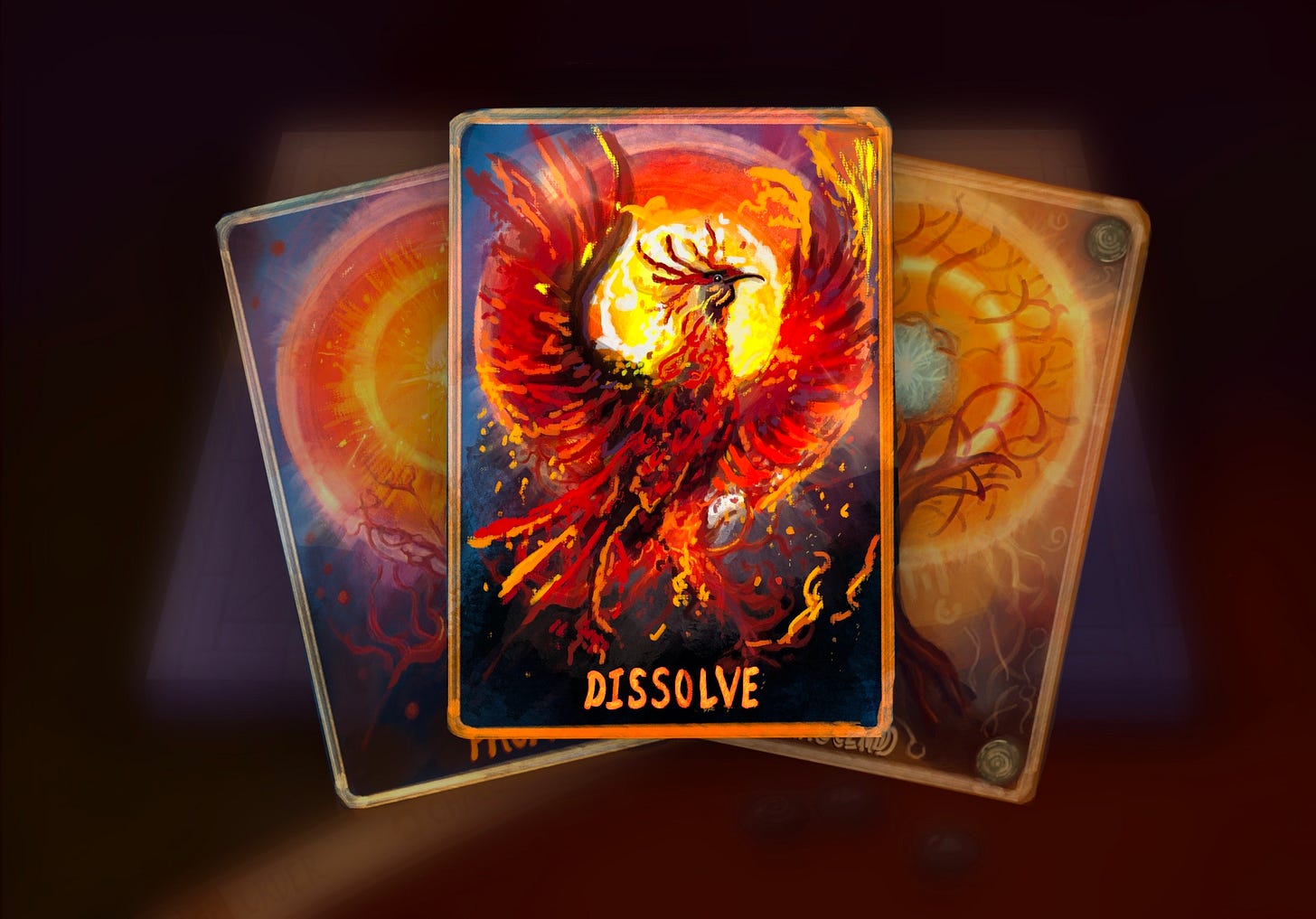
Access to Visionland comes at a steep price. Reaching it requires increasingly sublimating reputation, identity, and relationships in exchange for a transcendent communal cause or vision. It requires more than risk — it’s an active untethering of social, psychological, and bodily ties. All attempts to connect with God (or any Ultimate Transcendent Possible) require some form of relationship dissolution:
“If anyone comes to me and does not hate father and mother, wife and children, brothers and sisters — yes, even their own life — such a person cannot be my disciple.” Jesus in Luke 14:26, NIV.
We play DISSOLVE as we release our deepest fears, insecurities, and future hopes. Bodily ties lose their grip on us: status, sex, food, family, and friendship. And we drop our conceptual crutches too: science, doctrine, and theory. We abandon our own sense of identity. Dissolution is a kind of death.
Those who play it may become willing martyrs, sacrificing social standing and their deepest physical, social, and intellectual impulses for a more compelling ideal. While they don’t often live to see it, their sacrifice can spark future cultural revolutions.
But like any play in Chaos, DISSOLVE is highly unstable: yes, it may seem infinitely rewarding — but not all sacrifices are accepted. Playing here may also lead to a dissolution of discernment — an inability to distinguish between what’s worth sacrificing for and tragic, needless self-immolation. This Play can quickly flip to a darker side: IMMOLATE6
In closing, let’s take a look at how these plays work together through the incredible life of Joan of Arc:
At thirteen, an ordinary French maid claimed to encounter visions from Saints and Angels in the fields. They compelled her to live as a devout Catholic, predictably enough. But less predictably: Joan would liberate France.
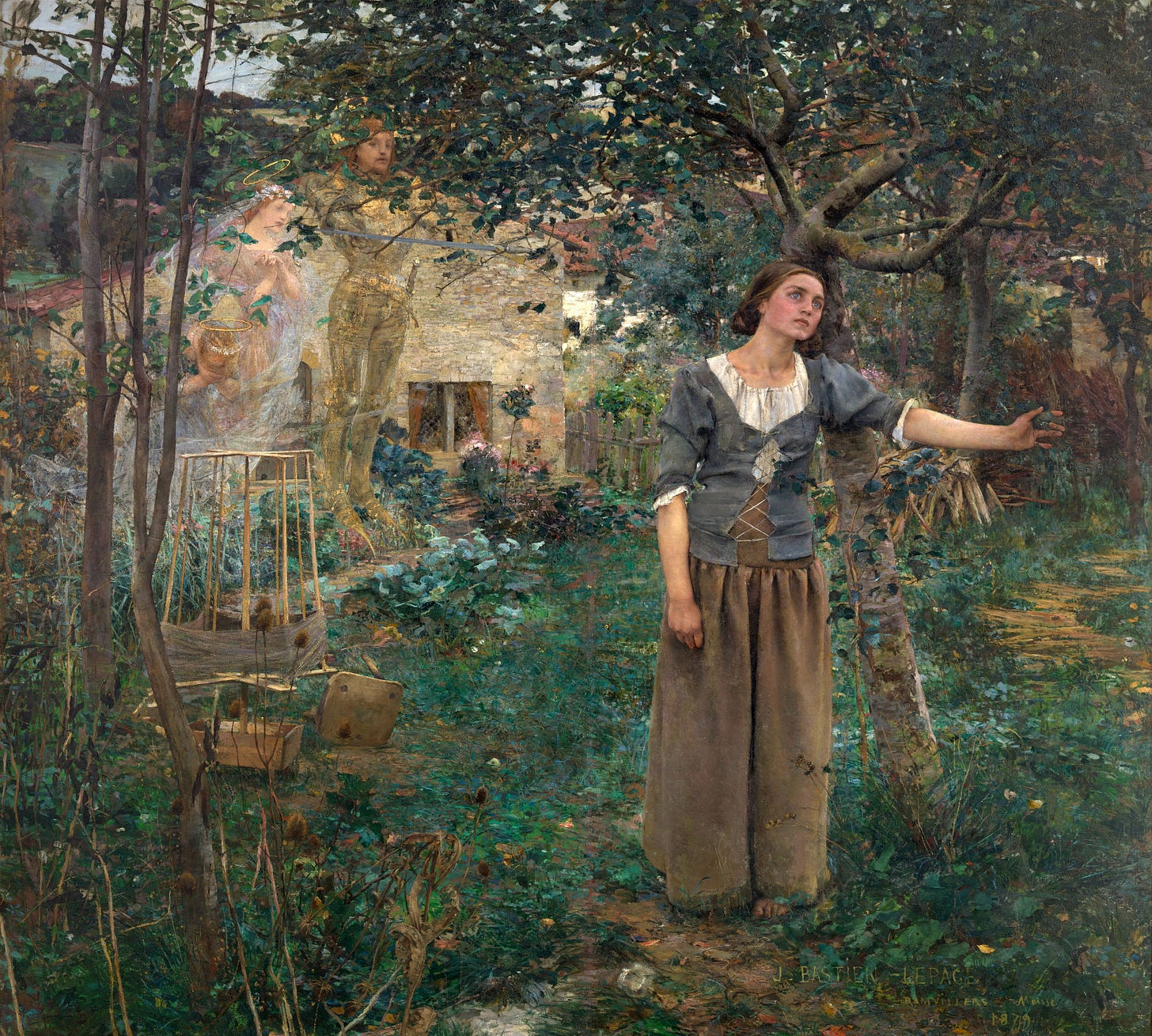
Her visions hatched into a plan more outlandish than any Hollywood caper: she would lead the French army to drive the English out of France and seat the hapless Charles Dauphin on his rightful throne. She cut ties with her family to chase the flailing army, naturally leading her father to publicly renounce her as a whore. (Why else would a young girl chase an army entirely composed of men?)
But Joan was so absorbed by a transcendent purpose that she — incredibly — persuaded the desperate French soldiers to do something far more outlandish: follow a young woman dressed and groomed like a man into one more battle in an endless, unwinnable war.
And after months of stalemate, they achieved victory in four days with Joan charging on the frontlines. After that, the army didn’t only follow her — they revered her as divinely inspired and hung their lives on her prophetic visions. (Joan also gained credibility from earlier prophecies about a virgin maid leading France to victory.)
Despite her spiritual status among common soldiers, she was a heretic to the day’s patriarchal, political, and religious order. In a strange, infamous trial spanning many months, an English-backed tribunal led by French churchmen tried her on charges reduced from 70 to 12, one of which was that she’d dressed like a man, violating Deuteronomy 22:5 — a damning sign of witchcraft.
Throughout, Joan kept a child-like hope that God would save her and gave a compelling defense for every charge. Ultimately, she was burned to death but maintained her fierce belief even as the fires consumed her flesh. Her executioners then burned her body twice more. When she was dissolved to ashes, they poured her into a nearby river, ensuring no relics of Joan would survive for future veneration.
This failed. Only 25 years later, Joan was put on trial by another generation of churchmen who posthumously absolved her. In 1920, she was canonized as a Saint like those who’d visited her visions centuries before. She remains the patron saint of France.
Whether you see Joan and her brief triumphantly tragic life as a miraculous saint, feminist icon, or a mentally-ill child deployed as a political pawn, her story is a glimpse of how a small encounter with Visionland plants seeds for messy revolutions that may change the course of the world and remain equally inspirational and unexplainable centuries later.
But here’s the rub: if we were a skeptical French merchant from Joan’s hometown — or her own father — we’d likely view her story with at least as much suspicion as any secular historian today. Many of her contemporaries saw her as a fraud or a demon and then burned her as such. And that’s how we see those currently orbiting Visionland. Want to spot a modern-day prophet? Look for a person generating a small, ardent following while growing increasingly heretical to everyone else. You might find them — for better or worse.