Much of what shapes our minds and desires these days is invisible: ideas, norms, relationships, and vibes without shape or place.
The Chaos Map is a philosophical user interface for mapping any human dimension in a shared psychological space.
It’s useful for things like:
- navigating the unique psychological phases of creative work
- visualizing personalities in a more humane, flexible way that doesn’t put people in boxes
- mapping a team playbook to spot gaps and resolve tensions
- empathizing with how our various worldviews not only make sense from different vantage points but form an interdependent whole
- and more.
Like a geographic map, a mental map doesn’t answer specific questions: it’s not a dictionary, theory, mental model, or set of instructions.
But, map in mind, it’s easier to gain insights, plan, and strategize — like a shared game board to play with ideas on top of.
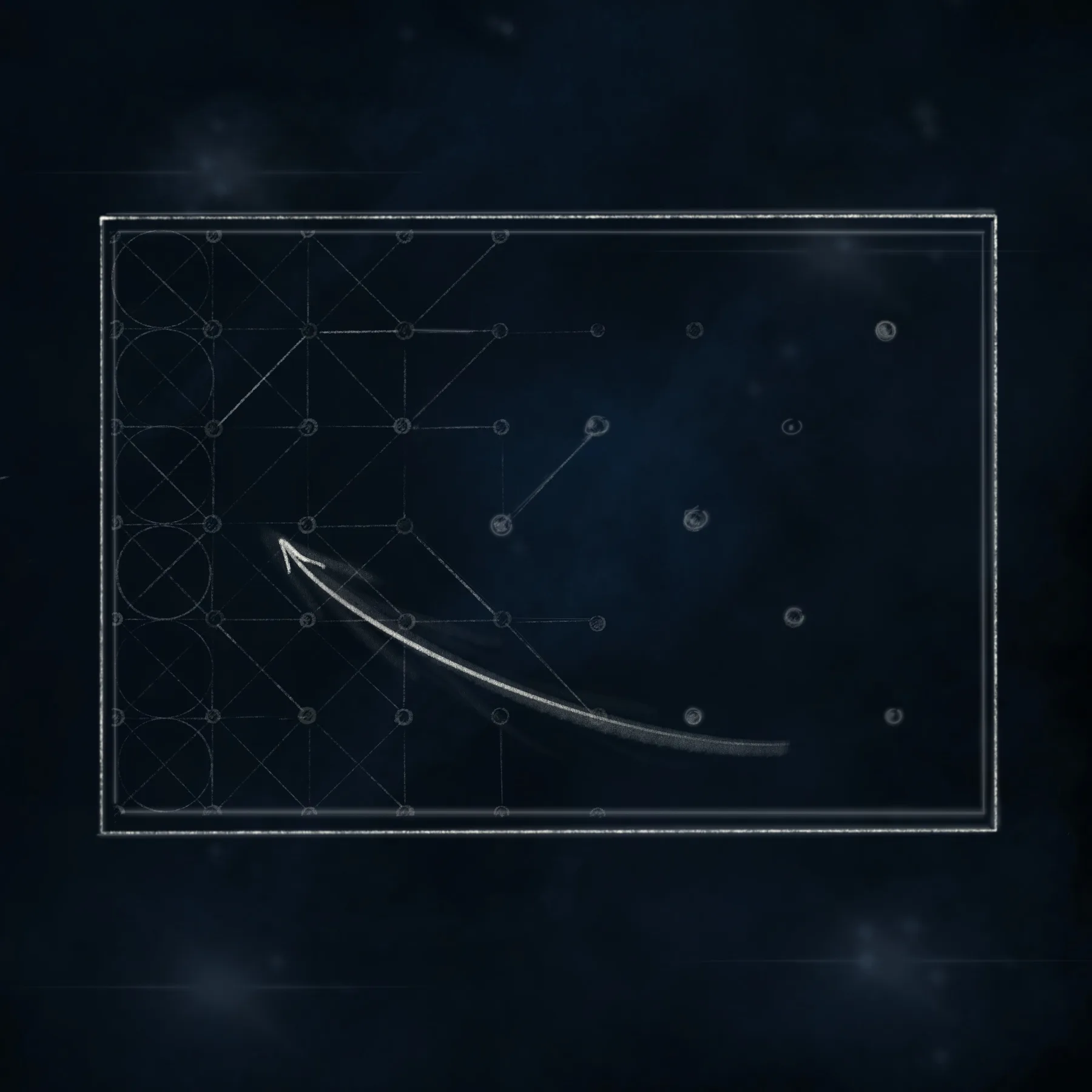
As a founder and conceptual designer at Pathwright, my favorite work exists between order and chaos: the messy middle area that connects our vision for the future of education with the practical reality of what’s possible now. The Chaos Map helps us surface insights as we develop our product; for example, it led to throwing out our roadmap.
But I find the Chaos Map most helpful for navigating the part of building a company that’s far more important and complicated than any technology: the people-part. The ability to see the personalities, role structures, and initiatives in one coherent visual map makes spotting gaps and aligning solutions more manageable. With the map in my mind’s eye, it’s easier to make a thousand small decisions that nudge us towards that difficult and magical balance between stability and creativity.
Privately, I use the Chaos Map to understand and harmonize the perspectives and paradigms I come across. I find that it helps me synthesize many views I’d previously assumed were in conflict.
Warmly,
Paul