I wrote about how everyone believes in personality types. I made the case that any personality model — even the Zodiac — upgrades how we instinctively type people.
Now, I’d like to inspect where personality types don’t work.
But, rather than adding yet another critique of where personality models are scientific or unscientific, we’ll look at an overlooked aspect: their design.
No one develops or uses a personality model to impartially, objectively describe reality, but as a tool to accomplish their purpose. And for tools, the design is what matters.
From wake to sleep, we navigate the world using mental models: a cup is a thing that holds coffee and helps us feel better about starting our job. When our models work, what we expect to happen generally happens, and the coffee doesn’t randomly explode into our face.
Of course, personality models are more complex than models for cups and liquids, but they exist to serve a purpose as well:
Personality models are our mind’s app for navigating ourselves and other people.
We wouldn’t critique our favorite notes app based on how true the notes are that we put into them — only how useful it is for capturing and referencing our ideas.
Similarly, we care less about how true our pet personality model is than whether it works for making sense of ourselves and others.1
Millions of people love using personality models — they’ll read books, join online communities, attend conferences, and display their type on their profile. It’s a multi-billion dollar industry making big claims like this:
“The Enneagram can free you from defensive self-limiting patterns and help you grow into an expanded version of yourself. It can show you who you really are by showing you who you think you are. Only then can you know who you actually are - and who you are not.” — The Enneagram Guide to Waking Up.
But there’s a sizable group of dissidents and books for them as well:
“Personality tests such as Myers-Briggs and Enneagram are not only psychologically destructive but are no more scientific than horoscopes.” — Personality Isn’t Permanent.
In my experience, personality dissidents share a common experience: they or someone they care about was harmfully limited by someone applying a personality model as if it was textbook science.2
But here’s an odd impasse: if you look into it, you’ll find that personality fans and foes agree that personality types should never be used to put people in limiting boxes:

Now if both sides are emphatically against using a personality model as a box, that raises an interesting question for our critique:
What about the format (or UI) of personality models inevitably leads to a large number of people feeling more limited than empowered?

Before we investigate why personality models don’t work for some of us, let’s consider why they work for so many.
From birth, we’re endlessly classified by others: we’re firstborn, just like our father, type A, sensitive, athletic, a troublemaker. Classmates label us as jock, nerd, bookworm, ugly, and worse.
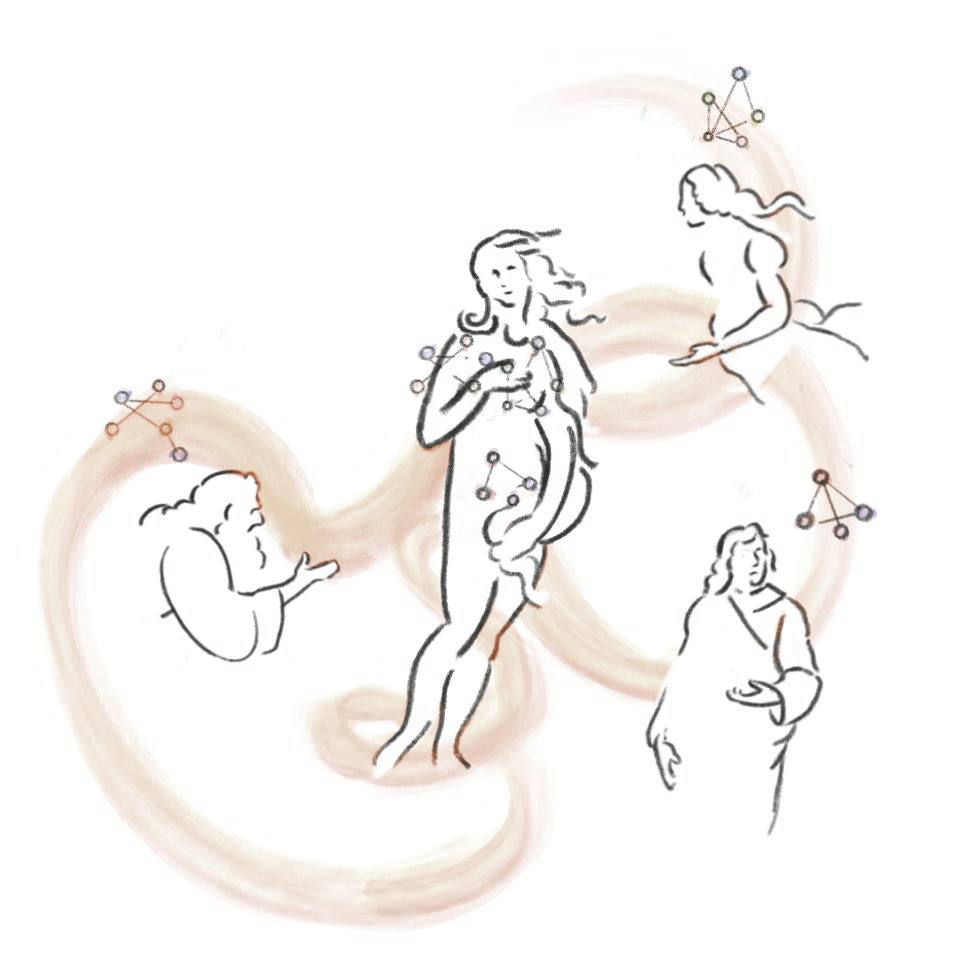
The birth of our identity evolves from the crowd around us.
Our identity evolves from the crowd around us in our most formative years.
“The world will ask you who you are, and if you don’t know, the world will tell you.” - Carl Jung
Still, there’s a part of us that’s a bit misfit — or at least unsatisfied — with the portrait of us painted by others, no matter how much we like or dislike it.
Personality models — from the Zodiac to the Big 5 — are often the first tools millions of people discover to develop a more profound sense of themselves as unique individuals, apart from the erratic proclamations of the crowd.
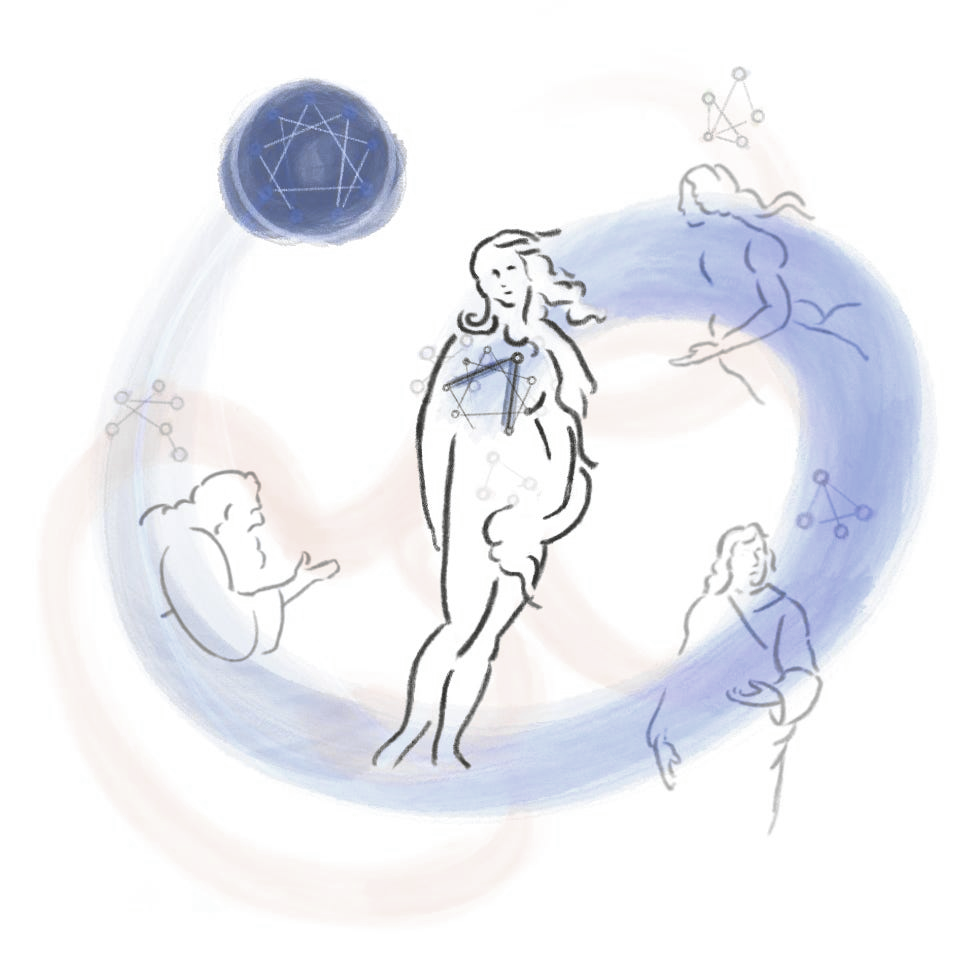
Personality models give us a way to see ourselves for ourselves.
Finally, we can see ourselves for ourselves.3
Our new people-typing app also gives us a way to see others as less confusing, hostile, or ignorant than we may have suspected. It’s a little easier to empathize and collaborate with different kinds of people.
But this introduces an issue: the more valuable a personality model is for us, the more we use it to classify others.
How do you know if someone is a fan of personality types? They’ll tell you, and you better believe they’ll type you (for your own good).
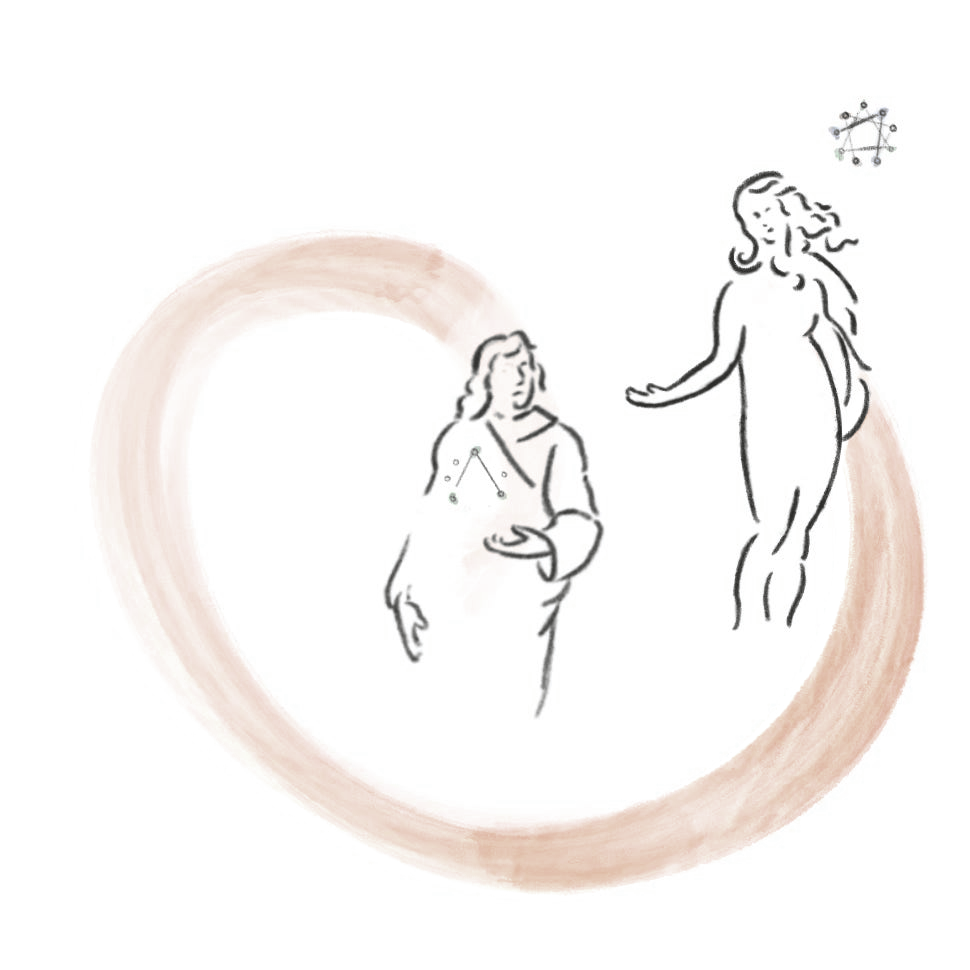
The ironic “network effect” built into personality models.
No matter how well-meaning we are, the irony of applying our model to others is that we’ve joined the crowd telling someone else who they are — the thing we used our model to break free of.
I don’t think the solution is to avoid using models to help others understand themselves; there’s a much deeper problem with the form (or UI).
Modern personality models borrow the form of science: classifications (INTJ, a One, a Red) and statistics (66% extroverted, 32% agreeable).4
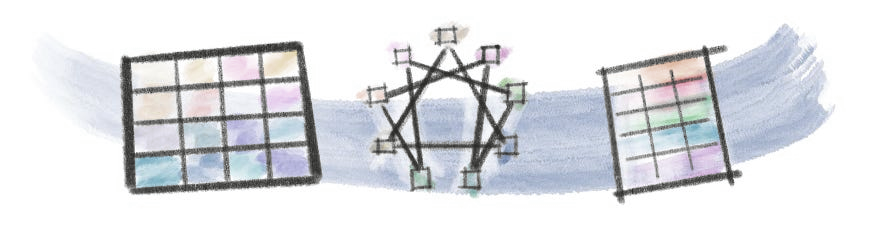
MBTI, Enneagram, and Big 5 place us in categorical, quantitative boxes.
So it doesn’t matter how many warnings and disclaimers we put in print: A categorical, quantitative personality result shapes how we apply it in practice: like an objective box.
“The medium is the message.”5
While these boxes may be a significant improvement, they’re limited as tools for understanding beings as complex, diverse, and ever-changing as humans.
Looking at the form of personalities as an app, I think the current UI has three significant limitations:
We aren’t the same all the time. We change by degrees based on where we are, who we’re with, and what we’re up to. But categorical personality models don’t factor in context; they only give us half the picture, at most.
Using a personality model feels like playing with baseball cards without knowing there’s a baseball field—we have the players, position names, and stats, but no sense of how they play together.
Personality boxes are sized to fit one person: us or someone else. So our personality app “crashes” when more than two people come into play.
For example: if an INTJ working on a project with an ESTP knows the model well, they can glean useful insights for better understanding and working together. But what if we drop an INFP into the mix? Now, it’s extremely difficult to extract any insight from our model about how all three of us can work well together. Add a fourth and there's no chance. Our short-term memory simply can’t hold onto, compare, or contrast the complexity of all these boxes at once.
This limitation is unfortunate because most important collaborations involve more than two people.
Using personality models is like listening to a concert while each orchestra part plays their notes individually— the winds, then the strings, and then the brass — but we don’t get to hear them all together.
An INTJ, Enneagram V, and DISC “i” walk into a bar… and there’s no way to tell that joke because the models aren’t compatible. They’re separate apps. Yet, they all claim to be tools for the same thing: navigating human personality. Why is it so difficult to use them together?
Using multiple personality models feels like watching a movie in several languages at once.
Introducing Personality Maps proposes a solution to all three problems.
What do you think would improve the design of personality models?