---
title: Why we need mental maps.
subtitle: Maps for navigating our invisible mindscapes.
date: 2022-01-01
published: true
source: chaosmap.substack.com
contentType: essay
description: Maps for navigating our invisible mindscapes.
newsletterUrl: https://chaosmap.substack.com/p/why-we-need-mental-maps
edition: annotated
image: /images/illustrations/img-7cd723929af5-light.png
---

<!-- id: essay-title
play: { variant: cover } -->

[@layout]: ../../layouts/reading.layout.md
[@page]: ../../design/page.components.md
[@reading]: ../../design/reading.components.md

# Why we need mental maps.


---

<!-- id: reading-introduction
image: "" -->

The modern world is all about invisible ideas & vibes.

Most prized jobs consist of transforming invisible ideas into bits, bytes, and sharable morsels more than they shape raw materials like wood, steel, or rock.

Even those of us who work in real pigment or chisel rocks succeed more by using better business methods, more powerful software, and social media prowess – all invisible ideas, systems, and data rendered on flickering screens.

Ultimately, it doesn’t matter how calloused or soft our hands are at the end of the day: we’re all getting our hands dirty in the political and social wars fought out in endless words and tribal signals on our smartphones, TVs, and radios.

---

<!-- id: reading-it-isn-t-easy-to-navigate-invisible-things
title: "It isn’t easy to navigate invisible things."
image: "/images/substack/why-we-need-mental-maps/1.png" -->

## It isn’t easy to navigate invisible things.

Since the ideas and vibes that make up much of our human experience lack shape or location, it’s impossible to see the same way as others or relate them to each other.

“Law and order,” “Marxist,” “God,” and “science” ring differently in our ears than they do in anyone else’s.

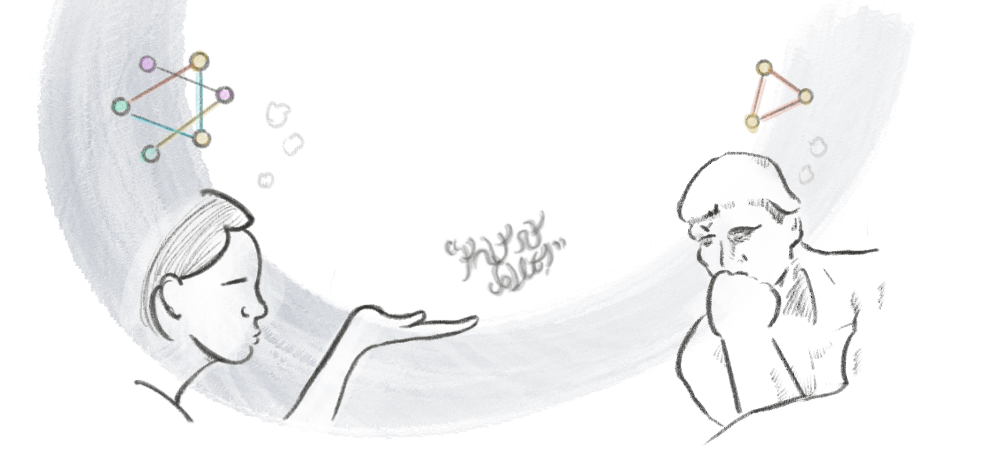
<figure><a class="cm-illustration-link" href="/images/illustrations/img-7cd723929af5-light.png" data-cm-ui><picture data-pmx-gallery><img height="460" width="985" class="edition-illustration" src="/images/illustrations/img-7cd723929af5-light.png" alt="No idea survives the transition from our mind to another’s intact." /></picture></a><figcaption><p><em>No idea survives the transition from our mind to another’s intact.</em></p></figcaption></figure>

At some point, we (hopefully) realize that no expression of an idea translates fully into the mind of another.

This impasse isn’t one we can throw more books or blogs at to solve; the problem isn’t with our words, tone, or data: it’s with their *limitations.*

But the world hasn’t always been so unnavigable, and it doesn’t have to be.

---

<!-- id: reading-we-ve-always-understood-things-in-space
title: "We’ve always understood things in space."
image: "/images/substack/why-we-need-mental-maps/2.png" -->

## We’ve always understood things in space.

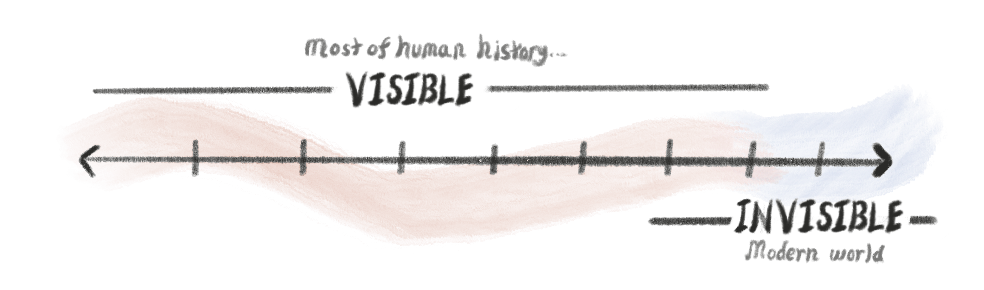
For most of history, everything that mattered *was* matter – physical objects situated in real space.

<figure><a class="cm-illustration-link" href="/images/illustrations/img-244fb21110cb-light.png" data-cm-ui><picture data-pmx-gallery><img height="290" width="984" class="edition-illustration" src="/images/illustrations/img-244fb21110cb-light.png" alt="We shaped and moved real objects in real places for most of human history." /></picture></a><figcaption><p><em>We shaped and moved real objects in real places for most of human history.</em></p></figcaption></figure>

Work was hands-on: reshaping and moving things from one place to another — forging in a blacksmith, threshing in a field, transporting down the Silk Road.

Objectives were for real objects and spaces like gold and land.

Tribes formed around campfires, towns, and keeps.

As invisible forces like laws and creeds grew more powerful than atoms, the old world grounded them within objects and places. Powerful ideas were embodied in and understood through symbolic objects, architectural wonders, and performed rituals.

Since we saw anything that mattered in the same way, we navigated them together without needing to think much about them — let alone *argue* about them.

---

<!-- id: reading-how-we-lost-the-map
title: "How we lost the map."
image: "/images/substack/why-we-need-mental-maps/3.png" -->

## How we lost the map.

The objects and spaces that mattered supremely throughout human history faded in an enlightened world.

Now, we’re governed almost entirely by shapeless, placeless abstractions: laws, memes, math, norms, creeds, and code.

But, *our brains still fundamentally understand things spatially.*

Our ancestors saw this instinctively, but modern minds [want to see the research](https://www.quantamagazine.org/the-brain-maps-out-ideas-and-memories-like-spaces-20190114/) before accepting a claim like that. We think the coded notations of science and technology have supplanted more primitive, pre-literate visual means of understanding.

Nowadays, visual, spatial expressions are left to entertainment and art; give us the propositions, creeds, data, and docs for everything that governs our lives and work, please.

But in reality, we respond to what we *see* and *feel* far more than what we conceptualize. So it’s challenging to navigate the constructs in our own minds, let alone in step with other minds.

It’s no wonder we’re drowning in information and memes while growing ever more confused and conflicted.

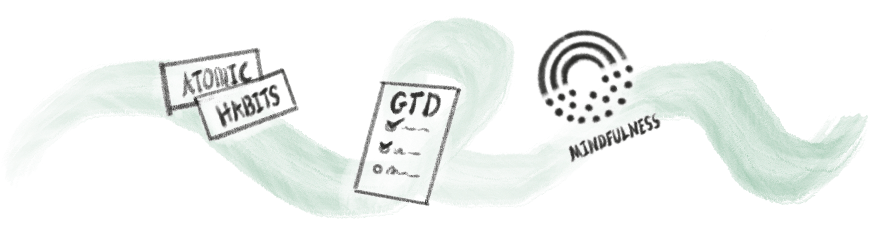
<figure><a class="cm-illustration-link" href="/images/illustrations/img-3a1d0dd3687f-light.png" data-cm-ui><picture data-pmx-gallery><img height="231" width="890" class="edition-illustration" src="/images/illustrations/img-3a1d0dd3687f-light.png" alt="How do these productivity practices relate?" /></picture></a><figcaption><p><em>How do these productivity practices relate?</em></p></figcaption></figure>

Everyone has their preferred turn-by-turn directions that partially overlap but don’t match. And no one has a map.

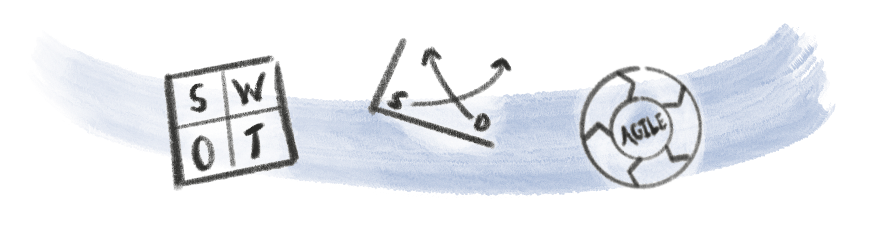
<figure><a class="cm-illustration-link" href="/images/illustrations/img-888625855990-light.png" data-cm-ui><picture data-pmx-gallery><img height="231" width="890" class="edition-illustration" src="/images/illustrations/img-888625855990-light.png" alt="When and where do we use these business tools?" /></picture></a><figcaption><p><em>When and where do we use these business tools?</em></p></figcaption></figure>

We have lots of pieces and rules but no game board.

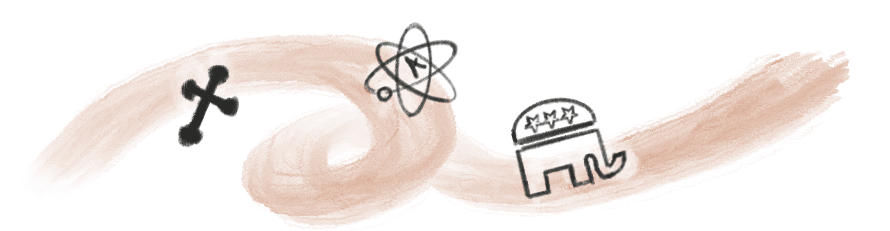
<figure><a class="cm-illustration-link" href="/images/illustrations/img-10b0f1b3e575-light.png" data-cm-ui><picture data-pmx-gallery><img height="231" width="890" class="edition-illustration" src="/images/illustrations/img-10b0f1b3e575-light.png" alt="What’s the real picture of reality (if there even is one)?" /></picture></a><figcaption><p>What’s the real picture of reality (if there even is one)?</p></figcaption></figure>

We’re in a puzzle club attempting to fit millions of pieces together without a box-top picture. So each dissectologist guesses the picture from their set of pieces and quarrels about which is real (or whether there’s a picture at all).

---

<!-- id: reading-mental-maps-help-us-navigate-invisible-ideas
title: "Mental maps help us navigate invisible ideas."
image: "/images/substack/why-we-need-mental-maps/6.png" -->

## Mental maps help us navigate invisible ideas.

> *Can we develop maps to better navigate the invisible world in our minds?*

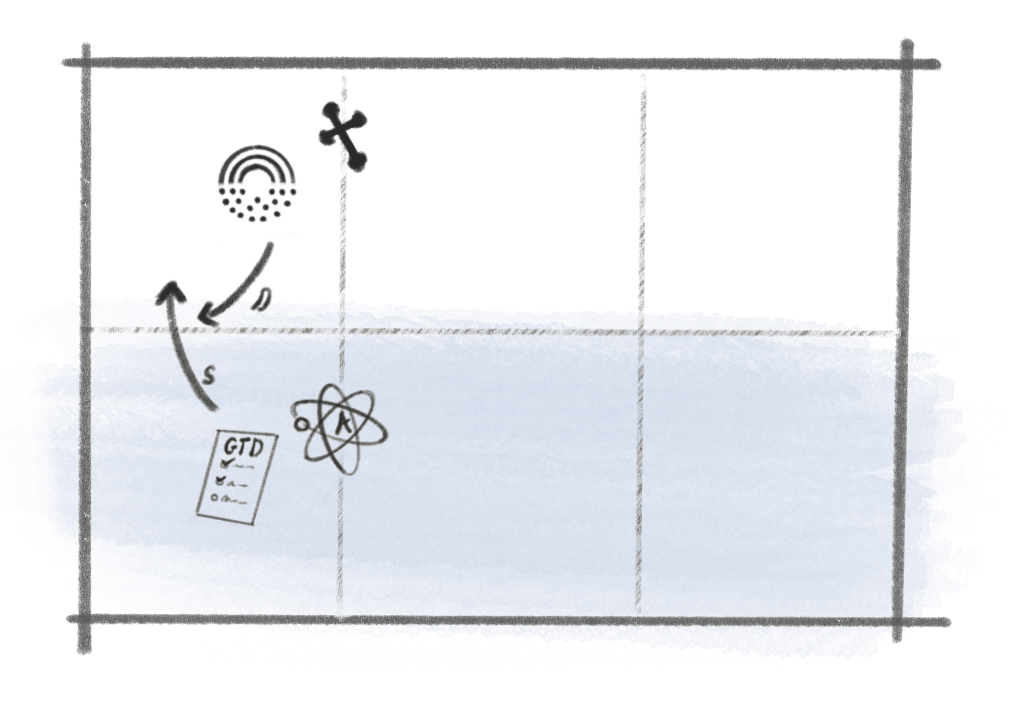
A “mental map” plots the mindscape, not the landscape.

It’s like a puzzle box top revealing how seemingly disconnected parts of our experience – science, art, fashion – fit together.

<figure><a class="cm-illustration-link" href="/images/illustrations/img-8a8f051b9e0d-light.png" data-cm-ui><picture data-pmx-gallery><img height="701" width="1011" class="edition-illustration" src="/images/illustrations/img-8a8f051b9e0d-light.png" alt="Ideas and tools placed in the relational and conceptual regions of the Chaos Map" /></picture></a></figure>

Like a geographic map, a mental map doesn’t answer specific questions: it’s not a dictionary, theory, mental model, or set of instructions.

But, map in mind, it’s easier to gain insights, plan, and strategize — like a game board to play with ideas on top of.<span id="footnote-anchor-1"></span>[@link(open=reference) 1](/annotations/why-we-need-mental-maps/footnote-1/index.md)

---

<!-- id: reading-the-chaos-map
title: "The Chaos Map"
image: "/images/substack/why-we-need-mental-maps/7.png" -->

## The Chaos Map

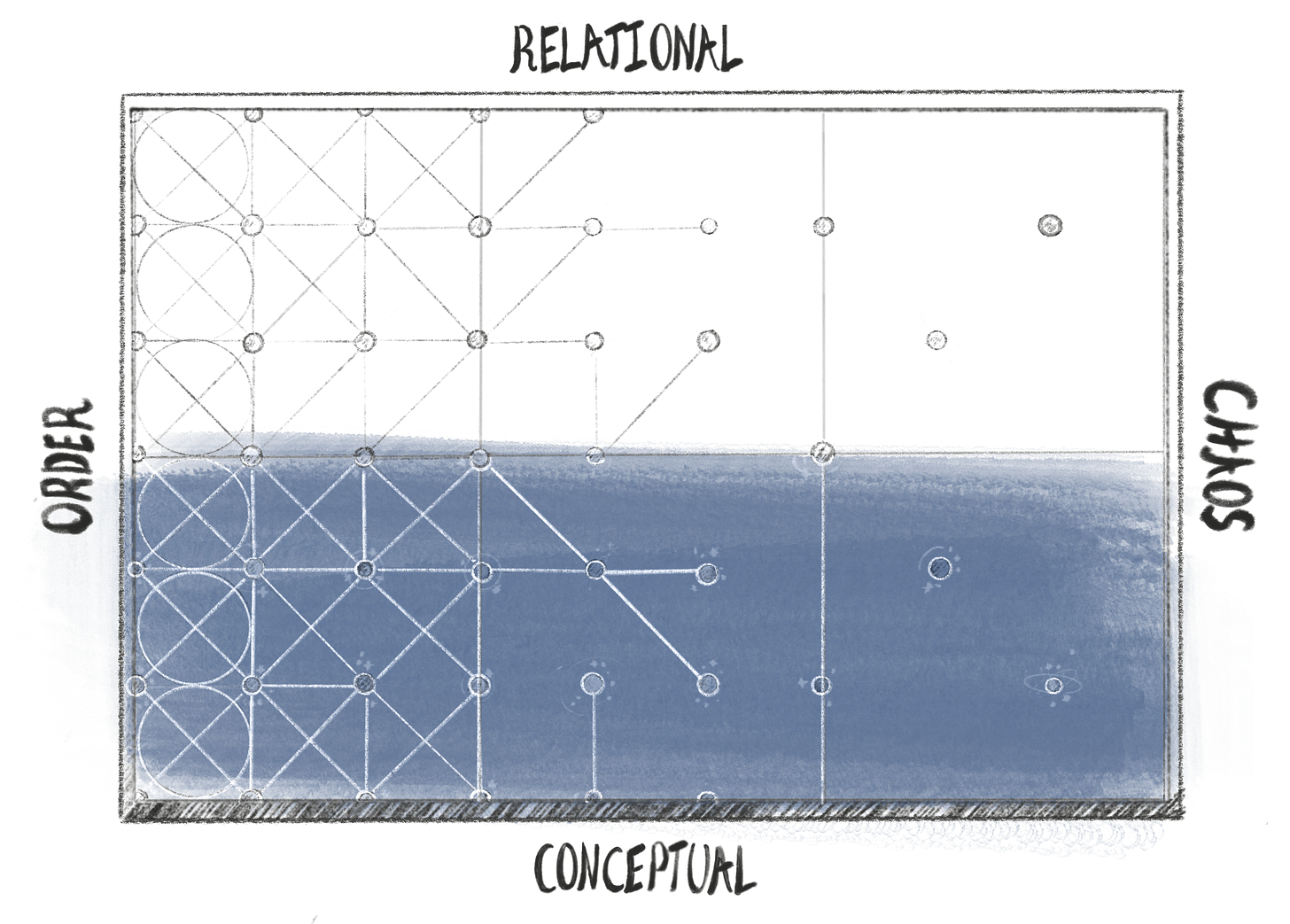
I like to say that the Chaos Map isn’t a “theory of everything.” It’s a “map of everything” — and I’m only partly joking:

<figure><a class="cm-illustration-link" href="/images/illustrations/img-14445cc965f2-light.png" data-cm-ui><picture data-pmx-gallery><img height="1043" width="1456" class="edition-illustration" src="/images/illustrations/img-14445cc965f2-light.png" alt="1) Everything moves within Order (known patterns) and Chaos (the unknown). 2) There’s an interplay between two mirror worlds of Order &amp; Chaos: Relational (felt experience) &amp; Conceptual (abstract)." /></picture></a><figcaption><p>1) Everything moves within Order (known patterns) and Chaos (the unknown).<br /> 2) There’s an interplay between two mirror worlds of Order &amp; Chaos: Relational (felt experience) &amp; Conceptual (abstract).</p></figcaption></figure>

I suspect that the Chaos Map is a primitive example of more robust mental maps that have yet to be developed.

Even so, as I’ve developed it [one essay](https://www.chaosmap.io/essays) at a time with a small group of conversation partners, it’s become increasingly useful.

If you’re interested in mental maps, I’d love to have you along as we explore questions like:

- Can we have more enjoyable and productive conversations with a shared visualization of [which space we’re talking from](/essays/mark-the-level-of-conversation-you-want-to-have/index.md)?
- How would our work improve if we had a visual map to plot every aspect of bringing ideas to reality? (Further, what if we could then layer on *where* people are working in real-time or historically — like a Marauder’s Map for collaborating on ideas?)
- Can we plot all the personality models for understanding each together in one map? Explore the [Personality Maps series](/essays/index.md#personality-maps).

For a complete guide to how the Chaos Map maps ideas, see:

[Guide to the Chaos Map](/index.md)

---

*I’d enjoy hearing from you. If you have a suggestion, interesting application, or critique of the Chaos Map, [send me an email](mailto:paul_johnson@hey.com), or [book a live conversation](https://calendly.com/pauljohnson/chaosmap).*