---
title: The hidden gap in the way we see things.
subtitle: "MBTI Personality Map, Part II: A critique and visual exploration of
  the different ways we perceive the world."
date: 2022-06-01
published: true
source: chaosmap.substack.com
contentType: essay
description: "MBTI Personality Map, Part II: A critique and visual exploration
  of the different ways we perceive the world."
newsletterUrl: https://chaosmap.substack.com/p/the-hidden-gap-in-the-way-we-see
edition: annotated
series: Personality maps
seriesOrder: 6
series-order: 6
image: /images/illustrations/img-894788bed310-light.png
---

<!-- id: essay-title
play: { variant: cover } -->

[@layout]: ../../layouts/reading.layout.md
[@page]: ../../design/page.components.md
[@reading]: ../../design/reading.components.md

# The hidden gap in the way we see things.


---

<!-- id: reading-introduction
image: "" -->

How does this quote come across to you?

> *"Great minds discuss ideas; average minds discuss events; small minds discuss people." — Eleanor Roosevelt*

Agree or disagree? I won't share my opinion yet, but we'll come back to it.

In this essay, we'll explore, map, and critique the second pair of personality traits in the Myers Briggs Type Indicator (MBTI) personality model: "sensing" and "intuition."

No matter how you perceive the MBTI, I hope that mapping the underlying concepts visually helps you navigate the space between how you and others see the world a little more easily.

Let's set the stage with a brief recap of what we’ve mapped so far:

---

<!-- id: reading-one-experience-two-worlds-of-interpretation
title: "One experience — two worlds of interpretation."
image: "/images/substack/the-hidden-gap-in-the-way-we-see/2.png" -->

## One experience — two worlds of interpretation.

[In “Are you a thinker or feeler?”](/essays/are-you-a-thinker-or-feeler/index.md), we mapped what MBTI refers to as "thinking" and "feeling." Carl Jung, whose ideas the MBTI builds on, defined these as distinct "judgment" functions: mental tools for interpreting the near-infinite amount of information endlessly playing out in the theater of our minds:

- **Feeling** sorts and prioritizes what we see by the subjective relationship to our personal values and social group.
- **Thinking** ranks and orders things using impersonal and abstract conceptual patterns — mental models, information, systems, etc.

We employ both functions to make sense of things, but the resulting patterns might as well be from different worlds:

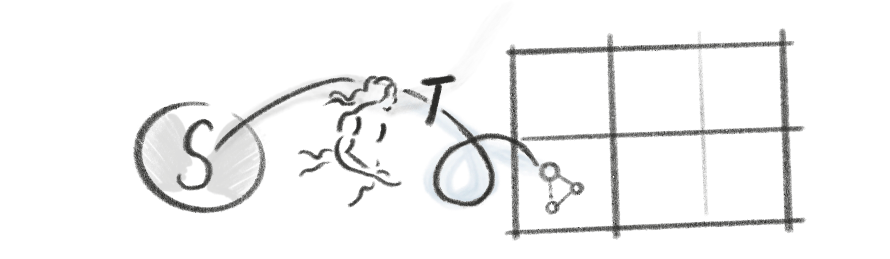
<figure><a class="cm-illustration-link" href="/images/illustrations/img-894788bed310-light.png" data-cm-ui><picture data-pmx-gallery><img height="259" width="890" class="edition-illustration" src="/images/illustrations/img-894788bed310-light.png" alt="Our feeling function finds relational patterns and thinking function conceptual ones." /></picture></a><figcaption><p>Our feeling function finds relational patterns and thinking function conceptual ones.</p></figcaption></figure>

Depending on our nature and nurture, Jung observes that we develop a personal preference for using feeling or thinking — a "feeling type" or "thinking type."<span id="footnote-anchor-1"></span>[@link(open=reference) 1](/annotations/the-hidden-gap-in-the-way-we-see/footnote-1/index.md)

The differences between these types make near-universal common sense, echo across history, and have parallels in modern science. But, the categorical and individualistic format MBTI packages Jung's theories within comes with a chance of [adverse side effects](/essays/why-personality-types-dont-work/index.md). For instance, we might  interpret the words “feeling” or “thinking” in our type quite differently than what’s meant by them.<span id="footnote-anchor-2"></span>[@link(open=reference) 2](/annotations/the-hidden-gap-in-the-way-we-see/footnote-2/index.md)

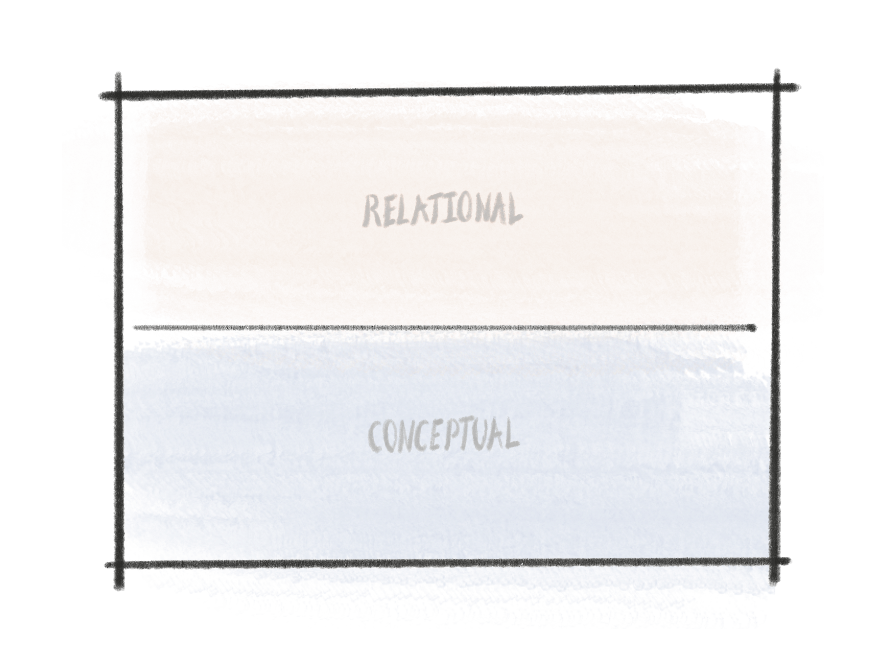
[In “Are you a thinker or feeler?”](/essays/are-you-a-thinker-or-feeler/index.md), we explored an alternative, sketching thinking and feeling as two ways to map the world of our experience — not as personality types.

Here’s where we left our map:

<figure><a class="cm-illustration-link" href="/images/illustrations/img-90b4aebc8de6-light.png" data-cm-ui><picture data-pmx-gallery><img height="663" width="886" class="edition-illustration" src="/images/illustrations/img-90b4aebc8de6-light.png" alt="Two worlds of sensemaking." /></picture></a><figcaption><p>Two worlds of sensemaking.</p></figcaption></figure>

- Our relational map helps us trace the subtle social and interpersonal factors in play.
- Our conceptual map helps us navigate the underlying concepts in play — the systems, equations, beliefs, and other abstractions.

---

<!-- id: reading-a-hidden-difference-in-our-perception
title: "A hidden difference in our perception."
image: "/images/substack/the-hidden-gap-in-the-way-we-see/4.png" -->

## A hidden difference in our perception.

Before we interpret what we find in our minds, we must *perceive* something. That's obvious enough.

> But when was the last time you thought about how you *perceive* things?

The origin of our perception isn't something we tend to think about — perhaps we've never thought about it. And fair enough: we're busy enough spending our mental energy working out what to do with what we find in our minds to question how they got there.

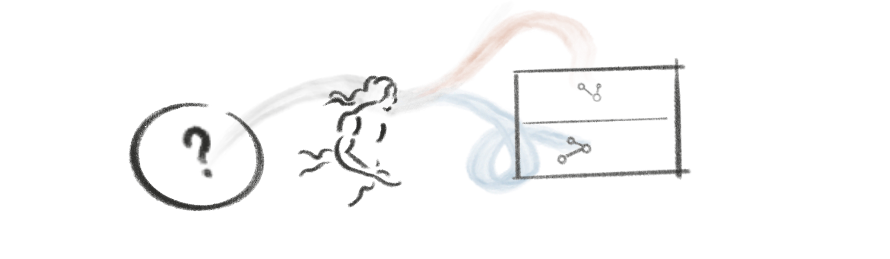
But here's the rub: we seem to perceive our experiences as differently as we interpret them.

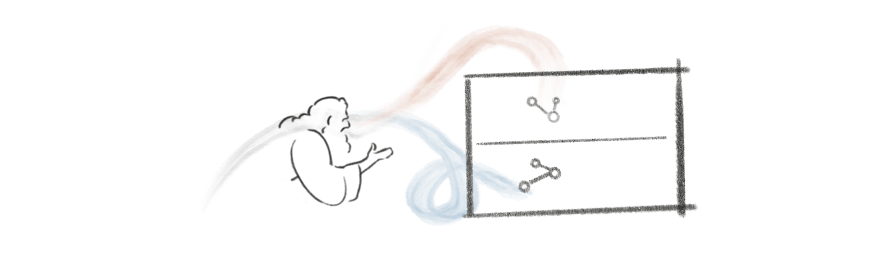
<figure><a class="cm-illustration-link" href="/images/illustrations/img-981a424b4fb9-light.png" data-cm-ui><picture data-pmx-gallery><img height="259" width="890" class="edition-illustration" src="/images/illustrations/img-981a424b4fb9-light.png" alt="What accounts for differences in what we perceive?" /></picture></a><figcaption><p>What accounts for differences in what we perceive?</p></figcaption></figure>

Assuming a shared frame of reference with our partner, professor, or coworker results in dizzying confusion about where they’re coming from leaving us to decipher:

*Are they missing the forest for the trees? Or is their head stuck up in the clouds?*

*What game are they up to?  Are we just too dumb to get it?*

Developing the skill to spot differences in our perception adds a second dimension to our ability to navigate ourselves and others.

---

<!-- id: reading-the-mbti-s-answer-to-differences-in-perception
title: "The MBTI's answer to differences in perception."
image: "/images/substack/the-hidden-gap-in-the-way-we-see/5.png" -->

## The MBTI's answer to differences in perception.

The MBTI's model of personality includes the two functions Carl Jung used to describe how we perceive things:

- **Sensing** takes in our experience directly through our senses.
- **Intuition** perceives what might be in play but isn't apparent.

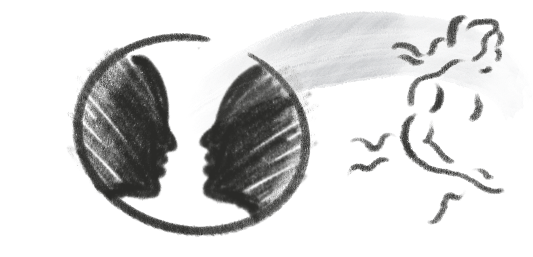
We employ both perception functions, but not at the same time, and have little control over which we’re using— they appear in our minds as a given.

<figure><a class="cm-illustration-link" href="/images/illustrations/img-0115e18ac465-light.png" data-cm-ui><picture data-pmx-gallery><img height="257" width="533" class="edition-illustration" src="/images/illustrations/img-0115e18ac465-light.png" alt="Our perception functions similarly to this optical illusion: we may see the negative space (two faces) or the positive space (a goblet) — but not both in the same moment. By analogy, sensing reveals the more apparent image, intuition another from the space in-between." /></picture></a><figcaption><p>Our perception functions similarly to this optical illusion: we may see the negative space (two faces) or the positive space (a goblet) — but not both in the same moment. By analogy, sensing reveals the more apparent image, intuition another from the space in-between.</p></figcaption></figure>

---

<!-- id: reading-sensing-tunes-us-into-what-s-observable
title: "Sensing tunes us into what's observable."
image: "" -->

### Sensing tunes us into what's observable.

If sensing is our primary lens for the world (a "sensing type"), we naturally see things more practically and realistically:

> *"When people prefer sensing, they are so interested in the actuality around them that they have little attention to spare for ideas coming faintly out of nowhere." — Gifts Differing*.<span id="footnote-anchor-3"></span>[@link(open=reference) 3](/annotations/the-hidden-gap-in-the-way-we-see/footnote-3/index.md)

At work, we gravitate towards observable, measurable tasks, enjoy the practical reality of things, and prefer more concrete feedback. "What works" is our main concern, and we're motivated to keep it working, whether it's maintaining relationships, our health, code, or reputation.

A sure sign that we're using our sensing perception is when we're more comfortable forming an opinion when things are predictable — we've seen examples, there are tried and true techniques, trustworthy sources — ambiguity is low.

---

<!-- id: reading-intuition-tunes-us-to-what-we-can-t-observe
title: "Intuition tunes us to what we can’t observe."
image: "" -->

### Intuition tunes us to what we can’t observe.

Intuition<span id="footnote-anchor-4"></span>[@link(open=reference) 4](/annotations/the-hidden-gap-in-the-way-we-see/footnote-4/index.md) is the opposite function and perceives things that our conscious sensation overlooks.

When intuition becomes our primary lens for perceiving the world (an "intuitive type"), we'll be inclined to take imaginative leaps and speculate between the lines instead of seeing things at face value.

> *"Those people who prefer intuition are so engrossed in pursuing the possibilities it presents that they seldom look very intently at the actualities.” - Gifts Differing*.

At work, intuitive types enjoy speculating about what *might be* more than giving attention to what already *is*. Intuition focuses us on new ideas, potential outcomes, and underlying motivations.

Rather than relying on facts or induction, our intuition forms an "impressionistic" snapshot of the *whole* of things all at once: we might get an instant perception of a movie, person, or situation; but the details remain fuzzy if they’re present at all.

A sure tell that we're using intuitive perception is that it's difficult to explain how we arrived at a view, yet it's as apparent as if we'd seen it with our own eyes.

---

<!-- id: reading-a-problem-with-mbti-s-framing-of-sensing-intuition
title: "A problem with MBTI's framing of sensing & intuition"
image: "" -->

## A problem with MBTI's framing of sensing & intuition

Let's revisit the opening quote:

> *"Great minds discuss ideas; average minds discuss events; small minds discuss people." — Eleanor Roosevelt.*

I can't make up my mind if this quote is more ridiculous or unkind. But, it's an excellent example of the modern tendency to equate an affinity for theoretical ideas with intelligence — even greatness — while labeling people who care more for the practical reality of people and events as "average" or "small" minded.

Our culture idolizes inventors, prophetic voices, and galaxy-brained gurus of all kinds — we're as fascinated by what’s new as we're bored with what's already worked out.

Which would you rather be? A "sensor" which sounds like a part of a machine or "intuitive" which sounds creative and mysterious?

Of course, Myers, Briggs, and Jung didn't intend for being an "intuitive" or any other function to become status signals. But here again the limitations of using the [forms of science](/essays/are-personality-types-scientifically/index.md) — psychometric tests resulting in prescriptive categorical results — lead to mass misuse. As a result, millions of people slap on any personality label that enhances their status like bumper stickers on cars or hashtags on their Instagram profiles.

---

<!-- id: reading-a-visual-map-of-sensing-intuition
title: "A Visual Map of Sensing & Intuition."
image: "" -->

## A Visual Map of Sensing & Intuition.

If we view personality a bit less as a science and more as an art, we can avoid the pitfalls of over-identifying with types or traits.  So, let's upgrade our Map of the MBTI by adding a second horizontal dimension: Order and Chaos.

---

<!-- id: reading-sensing-is-how-we-detect-the-order-of-things
title: "Sensing is how we detect the order of things."
image: "/images/substack/the-hidden-gap-in-the-way-we-see/6.png" -->

### Sensing is how we detect the order of things.

Order contains all the possibilities we’ve discovered and connected into reliable patterns that "just work.” Whether we’re mapping a relationship, our physical health, or our business we don’t tend to notice the order in our lives until it breaks.

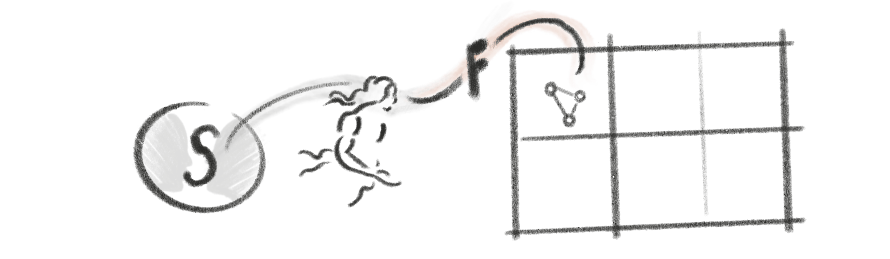
**Relational Order:** We use what the MBTI describes as *sensing* and *feeling* to mentally map the *relational order* we feel around and within us.

<figure><a class="cm-illustration-link" href="/images/illustrations/img-65f35d19cc9b-light.png" data-cm-ui><picture data-pmx-gallery><img height="259" width="890" class="edition-illustration" src="/images/illustrations/img-65f35d19cc9b-light.png" alt="We use Sensing to perceive and Feeling to interpret the relational patterns around us." /></picture></a><figcaption><p>We use Sensing to perceive and Feeling to interpret the relational patterns around us.</p></figcaption></figure>

Relational patterns can be hard to spot because they’re implicit and felt rather than articulated. They’re subtle when followed — embarrassingly obvious when violated.

We detect relational patterns [more through mimicry](/essays/how-mimetic-patterns-form-our-identity-relationships/index.md) than logic. From infancy, we absorb our ingroup’s shared values, traditions, jargon, norms, status signals, and other patterns that bind us together. And we define ourselves primarily in relation to others. [Every established group](/essays/relational-order-is-the-foundation-of-any-group/index.md) performs and relies on these social patterns whether we articulate them or not. No one is immune, only more or less aware.

But, the better our mental map of the relational order around us, the better our chances of fitting in, finding (just enough) individual uniqueness, and socially performing in an admirable — or at least appropriate — manner.

**Conceptual Order:** We use MBTI’s *sensing* and *thinking* functions to map the underlying concepts that govern our lived experience in the modern world.

<figure><a class="cm-illustration-link" href="/images/illustrations/img-9f578a9f52b8-light.png" data-cm-ui><picture data-pmx-gallery><img height="259" width="890" class="edition-illustration" src="/images/illustrations/img-9f578a9f52b8-light.png" alt="We use Sensing to perceive and Thinking to understand the conceptual patterns around us." /></picture></a><figcaption><p>We use Sensing to perceive and Thinking to understand the conceptual patterns around us.</p></figcaption></figure>

Our map’s conceptual order is [like an invisible operating system](/essays/the-language-of-the-conceptual-world/index.md) forged from intricate patterns of information, rules, and technologies that stabilize and empower everything we experience above.

Conceptual patterns are abstractions from our lived experience, making them *impersonal* by definition. So if we’re navigating our conceptual map of a situation while our partner is navigating their relational map of it, we’ll come across as coldly unempathetic no matter how technically correct our assessment.

---

<!-- id: reading-intuition-is-how-we-find-new-patterns-in-chaos
title: "Intuition is how we find new patterns in chaos."
image: "/images/substack/the-hidden-gap-in-the-way-we-see/8.png" -->

### Intuition is how we find new patterns in chaos.

Because sensing tunes into the current order of things, it's easy to recognize in ourselves and others. Order isn't mysterious; it's useful.

But our second perceiving function — "intuition" — has a mysterious, even mystical feel. Where do the premonitions, eureka moments, and imaginative leaps come from? A muse? Meditative techniques? <span id="footnote-anchor-5"></span>[@link(open=reference) 5](/annotations/the-hidden-gap-in-the-way-we-see/footnote-5/index.md) Accordingly, it's more difficult to map, but here's an analogy I find helpful: intuition is when our perception "zooms out."

Let’s flip the Chaos Map on its side to illustrate the analogy:

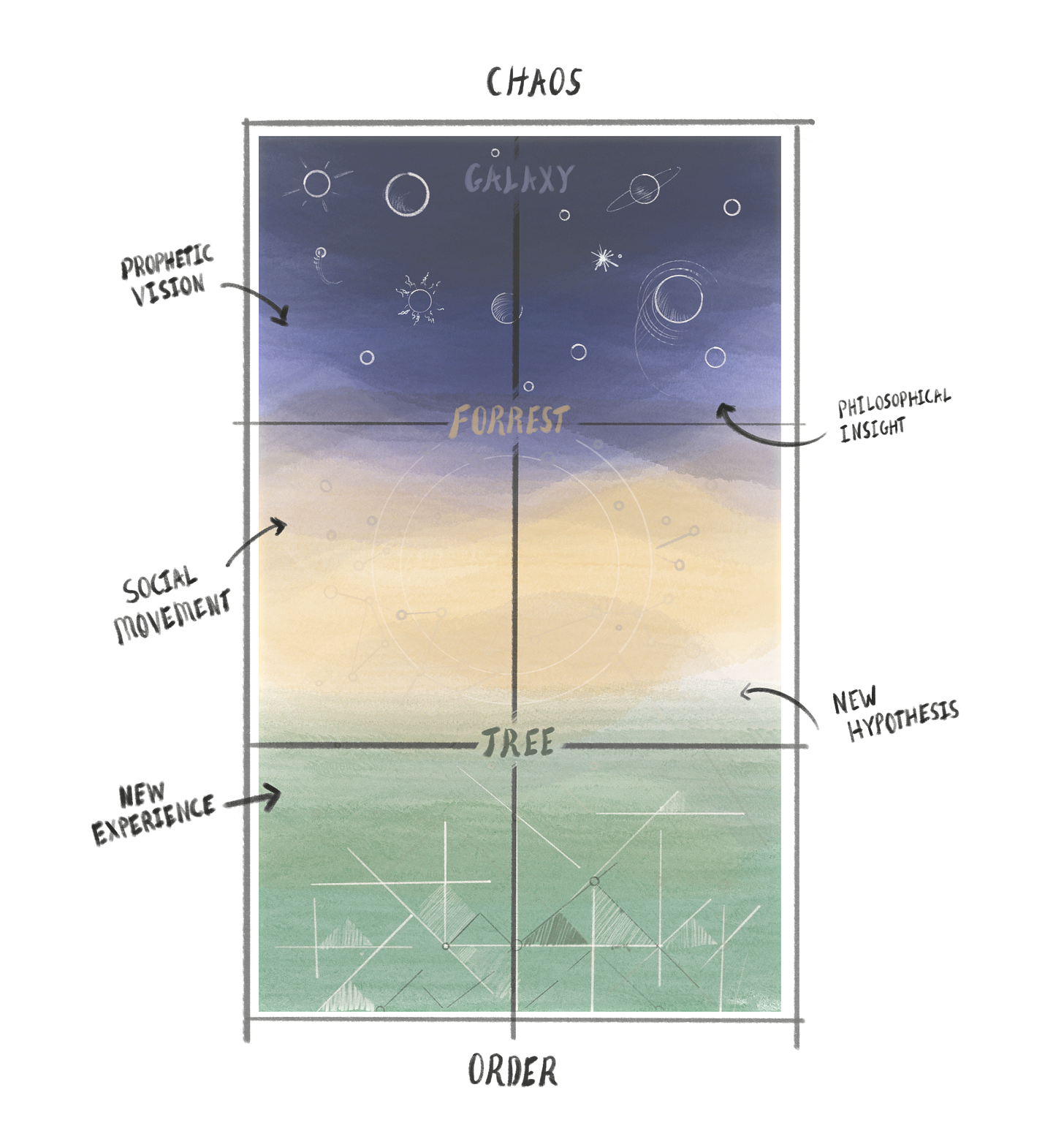
The further our perception zooms out, the more connections we see across what seem to be entirely separate things from a lower vantage point. We see new kinds of possibilities at different levels:

<figure><a class="cm-illustration-link" href="/images/illustrations/img-0e8e8eee201d-light.png" data-cm-ui><picture data-pmx-gallery><img height="1558" width="1456" class="edition-illustration" src="/images/illustrations/img-0e8e8eee201d-light.png" alt="Perception zooming from tree-level order through the forest to galaxy-level chaos" /></picture></a></figure>

- **Tree level:** Zooming out a little may surface a new hypothesis or prompt us to try a new experience;
- **Forrest level:** A bit more and we may uncover a new paradigm or potential spark of a social movement;
- **Galaxy level:** Zooming out further still, we may encounter a new philosophical insight or prophetic vision.

We can map the space between chaos and order for anything: a project, team, culture, or ourselves. For example, here's a practical application for rescuing  conversations when people are talking past each other: [Mark the level of conversation you'd like to have](/essays/mark-the-level-of-conversation-you-want-to-have/index.md).

Awareness of less-local and more universal patterns helps us navigate around disaster and towards opportunity in the long run. But soaring in the clouds of chaos comes at a cost: we risk ignoring critical details and losing touch with reality.<span id="footnote-anchor-6"></span>[@link(open=reference) 6](/annotations/the-hidden-gap-in-the-way-we-see/footnote-6/index.md)

Accordingly, we have different levels of risk tolerance for how high we trust our intuitive perception to climb — not unlike how one of us may feel dizzy and afraid on a 12-foot ladder while another enjoys leaping out of airplanes for sport.<span id="footnote-anchor-7"></span>[@link(open=reference) 7](/annotations/the-hidden-gap-in-the-way-we-see/footnote-7/index.md) And of course our comfort level for taking leaps varies greatly depending on the situation and mental state we’re in.

---

<!-- id: reading-map-your-optimal-place-within-any-group
title: "Map your optimal place within any group."
image: "" -->

## Map your optimal place within any group.

With the two dimensions we’ve mapped so far, it’s easy to locate the MBTI’s personality types on a map.<span id="footnote-anchor-8"></span>[@link(open=reference) 8](/annotations/the-hidden-gap-in-the-way-we-see/footnote-8/index.md)

But seeing Sensing, Intuition, Feeling, & Thinking as mental tools for mapping the patterns that already exist around us is a more accurate and useful view than attributing them to ourselves.

A map puts our context first, our position within it second, and helps us avoid taking our personality type too personally.

That said, now that we’ve plotted both dimensions of the map we have all the tools we need to locate where we play most naturally in any group: our [@link(open=reference) Gravity Point](/concepts/gravity-point/index.md).